Hōnaunau, Hawaiʻi · United States
Hale o Keawe
A thatched shrine stands on a stone platform by the sea. A wooden palisade and carved figures line the shore. Black lava, dark wooden carvings and low thatched eaves meet the bright waters of the Pacific.
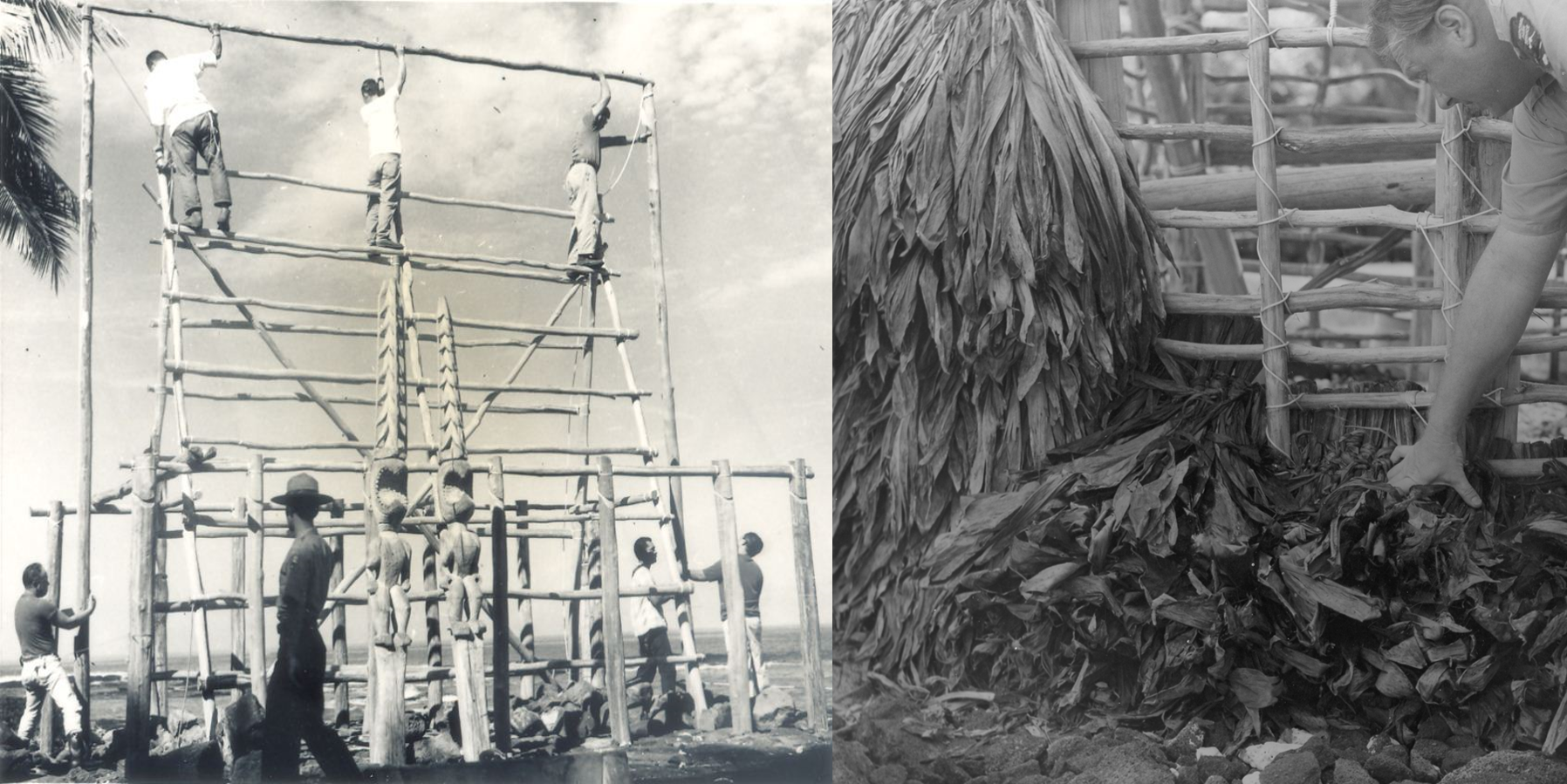
Construction · Built around the end of the 17th century. The shrine seen today is a reconstruction.
Story
Hawaiʻi’s ruling families enshrined the bones of their ancestors beside the place of refuge. The ancestors’ spiritual power made this an important sacred site. The traditional religious system changed in the 19th century, and the original shrine was lost.
People skilled in traditional crafts help care for the reconstructed shrine and its carved figures. The site is part of a living Native Hawaiian cultural landscape.
Sources
- English Wikipedia · Hale o Keawe in Puʻuhonua o Hōnaunau National Historical Park
- Institutional and visitor information
- U.S. National Park Service · The shrine and its ancestral traditions
- U.S. National Park Service · Russell Apple’s Hawaiian Thatched House: Use, Construction, Adaptation (1971), on the reconstruction and its dimensions
- Historic American Landscapes Survey, HALS HI-15 · Archaeology, reconstruction and materials at the Hōnaunau place of refuge
- Wikimedia Commons · Engraving after William Ellis’s drawing of the royal mausoleum at Hōnaunau
- U.S. National Park Service · Construction photographs showing workers lashing the shrine’s timber frame and thatching its walls with ti leaves